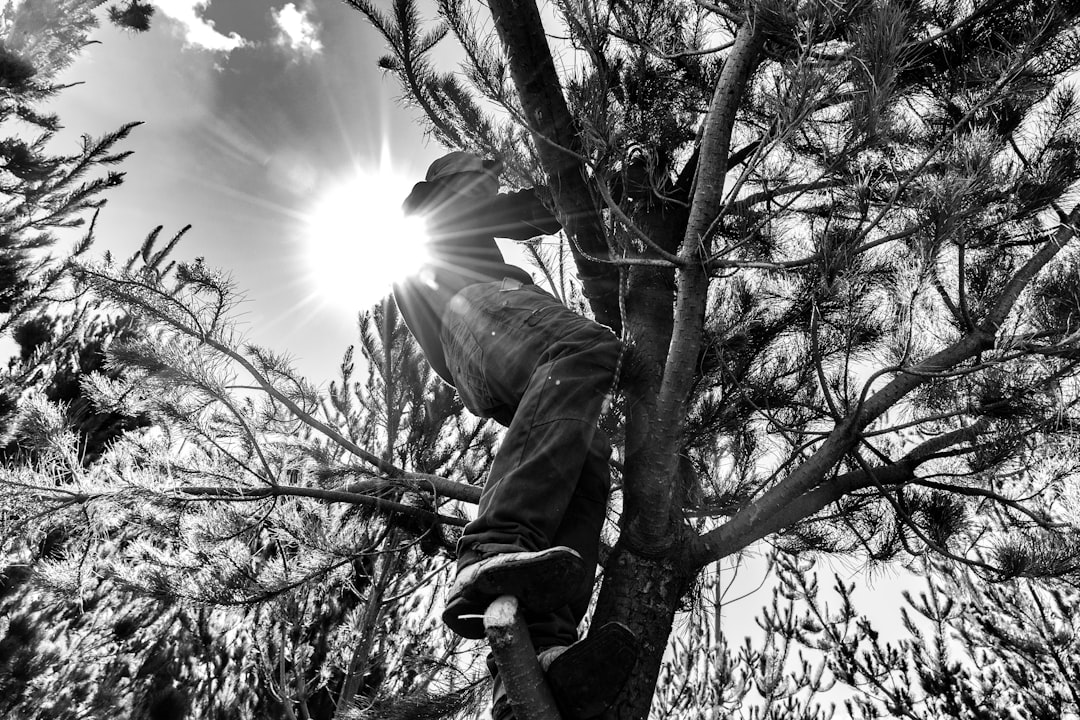
Longview sits in the Piney Woods, and the tall loblolly pines and post oaks that shade an East Texas yard are the same trees a spring squall or an ice storm loves to break. The good news is that most trees give warning before they fail. Walking your property with a critical eye once or twice a year, especially after a storm rolls through Gregg County, catches trouble while it is still cheap to fix.
A Lean That Wasn’t There Before
A tree that has grown at a slight angle its whole life is usually fine. A tree that leans more after a storm is not. Look at the soil on the high side of the trunk near 75602: if it is cracked, heaved, or pulling up in a plate, the root system is letting go. That tree is unstable even while it stands, and it belongs at the top of your list to have looked at.
Deadwood and a Thinning Crown
Large dead limbs in the canopy drop without warning, often on a still day. A crown that thinned out over one summer, with bare tips and undersized leaves, points to root stress, girdling roots, or disease. Deadwooding and a proper reduction cut can often save the tree, which is exactly the call our tree trimming and pruning crew makes on site rather than reaching straight for a removal.
Cracks, Cavities, and Fungus
A deep vertical crack up the trunk, a cavity where a branch tore out, or shelf fungus at the base all point to internal decay you cannot see from the outside. A loblolly can hollow from the inside while the crown still looks green. Included bark wedged between two co-dominant stems is another quiet hazard, since those unions split under wind or ice load along streets like Gilmer Road.
Roots and Soil at the Base
Mushrooms clustered on the root flare, soft or spongy wood at ground level, and roots that circle the trunk instead of spreading out are all reasons to worry. Root problems are the hardest to see and the most likely to bring a whole tree down at once, so they are worth a professional look rather than a guess.
When to Call Instead of Climb
A chainsaw and a storm-loaded tree are a bad mix, and wood under tension can snap back hard. If a tree shows any of these signs, get an ISA Certified Arborist to assess it under Tree Risk Assessment Qualification methods before anyone climbs. Not every flagged tree has to come down, and a written scope beats a vague after-hours number. When you are ready, contact us or call Hiddengardensteps at (903) 815-4753. We respond day or night across Longview and Gregg County, read the tree honestly, and clear any hazard safely.
Need help in Longview?
Call (903) 815-4753