Now reading: When should a Longview homeowner prune, remove or call an arborist for a large conifer?
Tree removal, trimming, and stump grinding for Longview and Gregg County, day or night. (903) 815-4753About Hiddengardensteps Contact Us
Hiddengardensteps

Tree Service in Longview, TX

Know Which Trees Are a Hazard Before the Next Storm

We read the tree first, then quote it. Removal, trimming, stump grinding, and 24/7 storm response across Longview and Gregg County. Free, no pressure inspections.

ISA Certified Arborist24/7 storm responseLicensed and insured
Tree service crew assessing a tree in Longview, TX

From the Canopy

Practical tree care notes and seasonal reminders for East Texas property owners.

When should a Longview homeowner prune, remove or call an arborist for a large conifer?
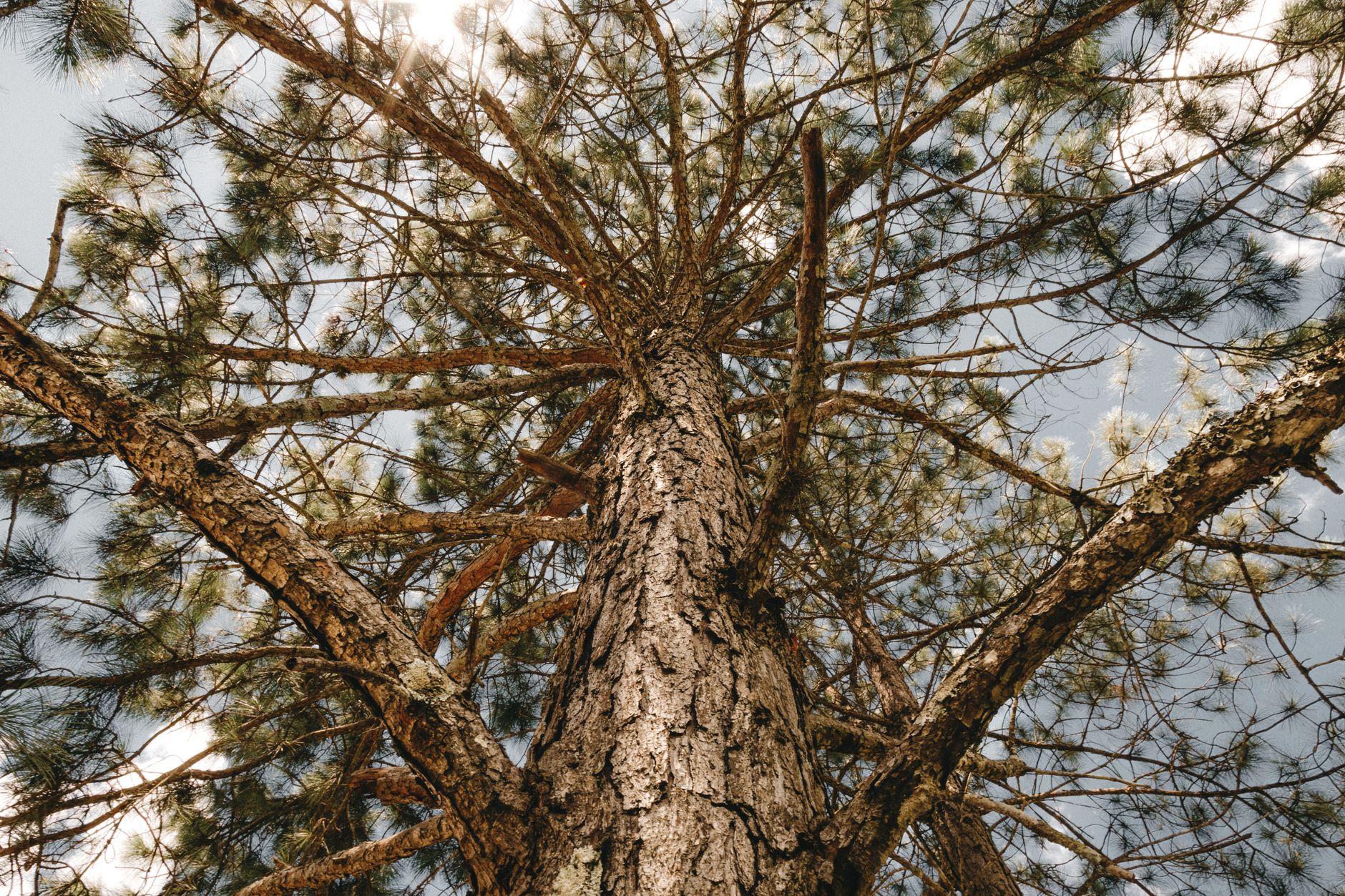
From bellow of majestic fragrant pine tree with thick branches and green needles under tranquil cloudy sky in Longview, TX

A Longview homeowner can prune dead limbs from a loblolly pine in any season, should remove a pine with a failing root plate or beetle damage soon, and should call an arborist before cutting anything near a roof or a power line. Pruning handles small, reachable problems on a healthy tree. Removal handles a tree that can no longer hold itself up. An arborist decides which one applies when the signs are mixed.

East Texas puts its own stress on tall pines. Gregg County sits in the Piney Woods, where loblolly and shortleaf pines grow fast in red clay that swells in wet months and cracks in dry ones. Summer drought, ice storms and straight line winds all test the same trees, so the right call depends on what the tree has already been through.

How can a Longview homeowner tell a loblolly pine is declining?

Needles that turn yellow or rusty brown in the middle of the crown tell a homeowner a loblolly pine is declining. A healthy pine holds green needles at the ends of its branches year round and drops only the oldest inner needles in autumn. When the whole top fades, when branches stay bare for a full growing season, or when the bark carries small round exit holes and pitch tubes the size of a pencil eraser, the tree is under attack from bark beetles or root rot. Pine bark beetles favor trees weakened by drought, so a pine that looked fine in spring can fail by the end of a hot August. Woodpecker activity on the trunk is another quiet clue, because birds go after the larvae under the bark. A homeowner can check these signs from the ground with binoculars and a walk around the base. Mushrooms near the roots, soft or crumbly wood at the base and a trunk that sounds hollow when tapped point to decay that no pruning will fix.

Which season suits pruning in Gregg County?

Late fall through winter suits pruning in Gregg County, because beetles that attack fresh pine cuts are least active when nights turn cool. Pine resin flows from every wound, and the smell of fresh sap draws engraver beetles during the warm months. Cutting dead or broken limbs between November and February gives the wounds time to seal before the insects return in spring. Hardwoods that grow beside the pines, such as water oak and sweetgum, tolerate pruning earlier in autumn. Dead wood can come out at any time, since a dead branch has no sap to attract anything. After a storm, broken limbs should come down quickly regardless of the calendar, because a hanging limb can drop without warning. A good rule is to remove no more than about a quarter of the live crown in one visit, and to leave the branch collar, the slightly swollen ring where a limb meets the trunk, intact so the tree can close the wound.

When does a pine need removal rather than pruning?

A pine needs removal rather than pruning when more than half of the crown is dead, when the trunk has a deep vertical crack, or when the roots have lifted the soil on one side. Those signs mean the structure is failing, and trimming the living branches only adds weight to a weak frame. A lean that appeared suddenly after a storm is more dangerous than a lean the tree has held for decades, because a fresh lean often means the roots have already torn. Look for a crescent of raised or cracked soil on the side opposite the lean. In Longview's clay soil, a saturated lawn after a week of rain makes that tear more likely, and a tree that stands over a house, a driveway or a fence line should be taken down before the next wet spell rather than after it. Dead pines also become brittle quickly. Standing dead wood sheds limbs in modest wind, so waiting a season to see what happens carries real risk for anything underneath.

What do East Texas storms do to tall pines?

East Texas storms snap tops, strip limbs and push shallow root plates out of soft ground. Loblolly pines grow tall with relatively narrow crowns, so wind loads concentrate high on the trunk. Ice storms add weight to every needle cluster, and the cold snap of February 2021 showed how many pines across the region lost large limbs under frozen buildup. Spring thunderstorms bring gusts that topple trees already weakened by a wet winter. After any storm, walk the property and look up. Hung up limbs, split trunks and branches resting on other branches should be left to a crew with ropes and rigging, because the load on a hanging limb is unpredictable and a homeowner on a ladder underneath is in the worst spot possible. Leave any tree touching a power line alone and call the utility, since only the utility can handle lines safely.

What happens to the stump and roots after removal?

A removed pine leaves a stump that can be ground below the soil line, left to decay or treated, and grinding is the most common choice for a yard that will be used again. A stump grinder chips the wood to a depth that depends on the next plan for the spot, deeper for a replacement tree and shallower for sod. Pine stumps rot slowly in East Texas, and the old root system can host fungi that spread to nearby living trees, so clearing it helps the surrounding landscape. Buried pipes, irrigation lines and cables sit near roots, so the area should be marked before any grinding starts. The chips can be raked into beds as mulch once they have aged, though fresh pine chips are best kept off vegetable gardens. Replanting in the same spot works better after a season of rest, and a different species such as bald cypress, live oak or a native oak suits a site where the previous pine died of disease.

How should a homeowner choose an arborist near Longview?

A homeowner should choose an arborist who can show proof of liability coverage and workers compensation, who inspects the tree before quoting, and who explains the plan in plain terms. Credentials from the International Society of Arboriculture, which certifies arborists, are a good sign, and the Texas A&M Forest Service publishes guidance on tree health that a reputable crew will know. Ask whether the plan keeps cuts small and avoids topping, the practice of chopping the crown flat, which leaves weak regrowth and stresses the tree. Ask who handles cleanup and whether the crew works near wires. A written scope that names which trees, which limbs and which cleanup steps are included prevents confusion on the day of the job.

A short seasonal habit helps every Longview property. Look up after each storm, check pines at the base each spring, and watch for fading tops at the end of summer. Small, early action on a healthy tree costs far less than an emergency removal after it lands on a roof.
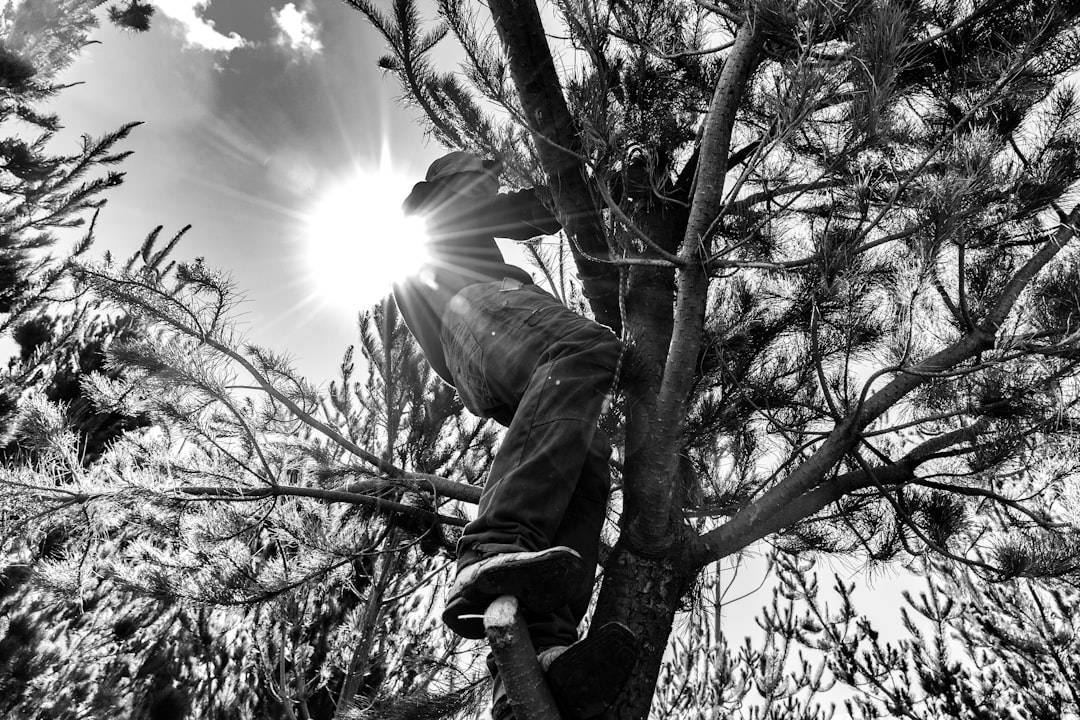

Five Signs a Longview Tree Is Ready to Fail

Arborist inspecting a leaning tree in a Longview, TX yard

Longview sits in the Piney Woods, and the tall loblolly pines and post oaks that shade an East Texas yard are the same trees a spring squall or an ice storm loves to break. The good news is that most trees give warning before they fail. Walking your property with a critical eye once or twice a year, especially after a storm rolls through Gregg County, catches trouble while it is still cheap to fix.

A Lean That Wasn’t There Before

A tree that has grown at a slight angle its whole life is usually fine. A tree that leans more after a storm is not. Look at the soil on the high side of the trunk near 75602: if it is cracked, heaved, or pulling up in a plate, the root system is letting go. That tree is unstable even while it stands, and it belongs at the top of your list to have looked at.

Deadwood and a Thinning Crown

Large dead limbs in the canopy drop without warning, often on a still day. A crown that thinned out over one summer, with bare tips and undersized leaves, points to root stress, girdling roots, or disease. Deadwooding and a proper reduction cut can often save the tree, which is exactly the call our tree trimming and pruning crew makes on site rather than reaching straight for a removal.

Cracks, Cavities, and Fungus

A deep vertical crack up the trunk, a cavity where a branch tore out, or shelf fungus at the base all point to internal decay you cannot see from the outside. A loblolly can hollow from the inside while the crown still looks green. Included bark wedged between two co-dominant stems is another quiet hazard, since those unions split under wind or ice load along streets like Gilmer Road.

Roots and Soil at the Base

Mushrooms clustered on the root flare, soft or spongy wood at ground level, and roots that circle the trunk instead of spreading out are all reasons to worry. Root problems are the hardest to see and the most likely to bring a whole tree down at once, so they are worth a professional look rather than a guess.

When to Call Instead of Climb

A chainsaw and a storm-loaded tree are a bad mix, and wood under tension can snap back hard. If a tree shows any of these signs, get an ISA Certified Arborist to assess it under Tree Risk Assessment Qualification methods before anyone climbs. Not every flagged tree has to come down, and a written scope beats a vague after-hours number. When you are ready, contact us or call Hiddengardensteps at (903) 815-4753. We respond day or night across Longview and Gregg County, read the tree honestly, and clear any hazard safely.

  1. Signs read before we quoteAn arborist checks lean, decay, root plate, and canopy dieback first, so the plan matches the actual risk, not a hunch.
  2. Honest save-or-remove callA single split limb on a sound pecan is often a reduction cut, not a takedown. We tell you which one your tree is.
  3. Storm response, day or nightWe answer 24/7 for fallen trees, split trunks, and limbs on roofs across Longview and Gregg County.
  4. Licensed, insured, localA fully insured crew that works from Melrose to Pine Tree, glad to share a certificate of insurance on request.

Hiddengardensteps provides tree service in Longview, TX, and the first thing our crews do on any property is read the tree before they touch it. Tree removal, crown thinning and deadwooding, stump grinding, cabling and bracing, storm damage cleanup, and plant health care all begin with one question, which is whether a tree is a real hazard or simply needs a trim. A leaning trunk, a fresh crack at a co-dominant stem, or a root plate lifting out of the soil tells a trained eye more than most homeowners expect. Those signs are exactly what we look for first along Judson Road, out toward Pine Tree Road, and in the older canopy of the Spring Hill area.

Failing trees rarely announce themselves. A canopy that thinned out over a single summer, mushrooms clustered at the base, bark peeling in a vertical strip, or a trunk that has started to lean since the last squall are all worth a closer look. Loblolly pines in the Piney Woods can hollow from the inside while the crown still shows green, and a post oak with included bark between two leaders can fail with little warning. When an ISA Certified Arborist walks your lot, the assessment follows Tree Risk Assessment Qualification methods rather than a guess, so you learn which trees near 75602 actually need work and which ones have good years left.

Longview sits in dense East Texas woods, so the troubles we solve tend to repeat. Deadwood hanging over a driveway, girdling roots choking a young maple, oak wilt moving through a street, and storm-split limbs caught in the canopy are the common ones. Each has a different answer. A hazard limb gets a proper reduction cut at the branch collar, a weak union gets steel cable instead of a saw, and a tree that is genuinely gone gets sectioned down piece by piece. We prune to ANSI A300 standards and climb under ANSI Z133 safety practice, and we say plainly when a tree can be saved rather than pushing a removal it does not need. Homeowners from Green Acres to Hallsville keep our number for that reason.

From the first call to the final rake, the process stays predictable. An estimator comes out, walks the lot, and hands you a written price before any saw runs, including whether stump grinding is bundled or billed separately. On the job the crew rigs heavy sections down instead of dropping them near the house, chips the brush, hauls the wood, and leaves the lawn clean rather than a pile of debris by the curb on Gilmer Road. For a tree already on the ground after a storm, we answer day or night across Gregg County and can usually be out the same day.

The Tree Work We Handle

One local team for the full range of tree work, from a light structural trim to a crane-assisted removal beside the house.

01Tree Removal
Complete felling and sectional dismantling of dead, dying, or hazardous trees, rigged down piece by piece when they stand close to a roof or a power line off McCann Road.
02Tree Trimming and Pruning
Crown thinning, crown raising, crown reduction, and deadwooding cut at the branch collar to ANSI A300 standards for safer, healthier trees.
03Stump Grinding
We grind leftover stumps 4 to 12 inches below grade to stop regrowth and clear the trip hazard, then backfill or haul the grindings away.
04Emergency Storm Damage
Round-the-clock response for uprooted trees, split trunks, and hanging limbs, including trees pulled off roofs and vehicles after East Texas storms.
05Cabling and Bracing
Steel EHS cable and threaded bracing rods installed to support co-dominant stems and weak unions, cutting the odds of a failure in the next storm.
06Plant Health Care
Diagnosis and treatment of pests and disease, including trunk injection for emerald ash borer and deep-root fertilization to bring a stressed tree back.

Neighborhoods and Towns We Cover

We cover Longview and the surrounding Gregg County communities, plus the nearby towns along the US 259 and I-20 corridors. From the mature canopy in the Spring Hill and Green Acres neighborhoods to newer lots out past Hawkins Parkway, we work them all. If a tree is on the ground, we can usually be out the same day.

  • Longview, TX (75601, 75602, 75603, 75605)
  • Kilgore, TX
  • White Oak, TX
  • Gladewater, TX
  • Hallsville, TX
  • Gilmer, TX
  • Easton, TX

Not sure whether you are in our range? Call (903) 815-4753 and we will tell you straight.

What Removal and Trimming Run in Gregg County

Tree pricing comes down to the size of the tree, how close it stands to a structure, and whether a crane or heavy rigging is needed. Stump grinding is commonly billed around $3 to $5 per inch of diameter. Storm and after-hours calls carry a premium for the response and the risk. The ranges below are typical for the Longview area, and we put the firm number in writing after a free on-site look.

Trimming and stump grinding$100 to $1,200
  • Pruning to ANSI A300 standards
  • Stumps ground below grade
Get estimate
Tree removal$300 to $4,000+ per tree
  • Small drops to large crane-assisted jobs
  • Wood and brush hauled away
Get estimate
Emergency storm response$500 to $5,000+ per job
  • 24/7 response, day or night
  • Trees cleared off roofs and drives
Get estimate

Questions People Ask Before Booking

How do I know if my tree actually needs to come down?
Look for a lean that appeared after a storm, a soil or root plate lifting on one side, deep vertical cracks, large deadwood in the crown, or fungus at the base. Any one of those warrants a look. An ISA Certified Arborist uses Tree Risk Assessment Qualification methods to judge whether a tree near 75602 is a hazard or can be kept with pruning or cabling.
How much does it cost to remove a tree in Longview?
It depends on height, trunk diameter, and how close the tree stands to the house or a power line. A small ornamental under 30 feet is a straightforward drop, while a mature loblolly pine or post oak may need a crane or piece-by-piece rigging. We give a firm written price after a free on-site look off Marshall Avenue or wherever your tree stands.
Can you save my tree instead of removing it?
Often, yes. A single split limb on an otherwise sound pecan can be cleaned up with a reduction cut, and a co-dominant stem with included bark may be supported with steel cable rather than heavy cutting. We recommend removal only when the structure or decay leaves no safe alternative.
Do I need a permit to remove a tree on my property?
For a tree on private residential land in Longview, a permit is usually not required, though protected trees and commercial lots can differ. We help you confirm before we schedule the work on Mobberly Avenue or anywhere in Gregg County.
Are you licensed and insured?
Yes. We are a licensed and insured local company carrying general liability and workers coverage. We are glad to send our certificate of insurance before the crew arrives at your address.
How fast can you get to a fallen or storm-damaged tree?
We answer 24/7, and for a tree on a roof or blocking a driveway in Longview we can usually be out the same day. Call (903) 815-4753 and describe the hazard so we bring the right gear, whether that is a crane or a chipper.
Do you grind the stump, or is that separate?
Grinding is often quoted separately, priced around $3 to $5 per inch of stump diameter. We tell you upfront on the estimate whether the stump is included in your removal price so there is no surprise.
When is the best time to trim my trees?
Late winter dormancy is ideal for most East Texas shade trees, but hazard limbs and storm damage get handled any time of year. We avoid pruning oaks during the high-risk oak wilt window whenever the work can wait.

Book Your Free Tree Inspection

Worried about a leaning trunk, a dead limb over the driveway, or a tree the last storm loosened? Call and we will walk your property, tell you honestly whether it can be saved or needs to come down, and put a clear price in writing. For a tree already on the ground, we respond day or night across Longview and Gregg County.

Call (903) 815-4753